I spoke with Elijah of The Unabridged Gamer about Biblical allegories in the Dead Space franchise, game design, forcible conversion, the in-universe religion Unitology, and more!
On a personal note, I’ve really been looking forward to covering this series, so it was a blast recording this and getting the information from such an informed (and entertaining) source.
*Dead Space 2 was NOT received for review/coverage. See our statement of ethics here and game review criteria here.
I dived into highly-acclaimed sandbox MMO Black Desert Online* to explore how combining traditional MMO systems with endless compulsion loops can make your actions feel insignificant, and an open-world seem smaller than ever.
Christian players may want to pay special attention to the segment starting from 12:37, where I discuss the “Black Spirit” you are forced to serve, and how this spiritual conflict mirrors the potential issues seen in Black Desert Online’s gameplay systems.
*Black Desert Online was received for review/coverage. See our statement of ethics here and game review criteria here.
I spoke with Christian board game designer Lance Hill of Funhill Games about board game design and marketing, localization issues, digital board game conversion, inspirations, designing a fun Biblical board game, Kickstarter, and a ton of other cool stuff that won’t save this from being a run-on sentence!
I spoke with the developers of upcoming first-person adventure UnderEarth about game design, team building/retention, and more! Despite some technical difficulties, the team was as hilarious as they were insightful.
The Deadly Tower of Monsters is a flawed, fantastic, loving pastiche of 50s sci-fi B-movies. Complete with an extremely smart script parodying gaming, film, and “Director’s Commentary” cliches, I think ACE Team did a killer job of avoiding almost every one of the many pitfalls that could have completely destroyed this unique experience.
Even if you don’t play it through to the end, The Deadly Tower of Monsters offers thoughtfully-designed camp action like nothing else out there. Can’t recommend it enough.
Developers Insomniac Games and Lisa Brown use game design and a gorgeous homemade aesthetic to promote emotional empathy in fantastic family-friendly title, Slow Down, Bull.*
*Sources of screenshots are listed in their respective file names.
Full Disclosure: David Pittman is both a friend, and someone I may work with professionally in the future. The various modes of coverage below contain my honest opinions regardless of these facts.
Christian developer David Pittman‘s previous game, Eldritch, is something of a beautiful mess. A hyper-stylized riff on H.P. Lovecraft‘s tangled lore, it throws almost every idea loosely connected to adventuring through supernatural catacombs into a randomly-generated, sandbox FPS. Somehow, this unwieldy concoction works, producing a stealthy action game that changes tone (and your subsequent approach as a player) by the second. Stretches of calm sneaking are punctuated by frenzied dashes across gaping chasms as ancient god-spawn hunt you through winding catacombs. The unintentional blasting of a floor opens into a clearing containing a small army of statues, waiting for you to look away before planting their axes in the back of your skull.
Eldritch juxtaposes mazes of deadly cultists and ancient abominations against creatures like this…Human-sized penguin.
I mention Eldritch (despite several potential content issues) because it showed me something valuable. That beneath NEON STRUCT‘s serious narrative and lettered grades of performance lies a blazing-fast, non-lethal stealth game with more room for exploration and slapstick hijinks packed into one level than most AAA games fit into an entire campaign.
*Sources of screenshots are listed in their respective file names.
Full Disclosure: David Pittman is both a friend, and someone I may work with professionally in the future.
__________________________________
*The interview below was recorded October 23rd, 2015*
I spoke with Christian developer David Pittman of Minor Key Games about his work on immersive first-person shooters BioShock 2, Eldritch, NEON STRUCT, and the upcomingSlayerShock. Join us as we discuss the Steam economy, diversity and representation, faith, life in a large studio, taking care of yourself, and the dreaded “Indiepocalypse:”
Though I can’t wholeheartedly recommend Else.HeartBreak()‘s* gameplay due to factors including objectionable moral content (the plot virtually requires the player to engage in stalker-like behavior, use of/references to drugs and alcohol, etc.), the freedom it offers provides compelling lessons for aspiring coders and established game developers alike.
*Else.HeartBreak() was received for review/coverage. See our statement of ethics here and game review criteria here.
That Dragon, Cancer was created by predominantly Christian-staffed independent studio Numinous Games. Among these developers are the Green family, whose story and struggles are captured by the game.
——————
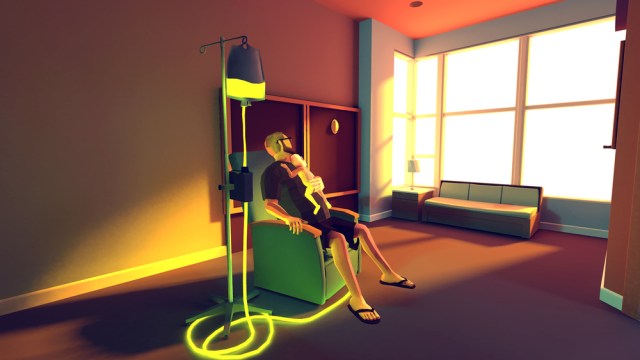
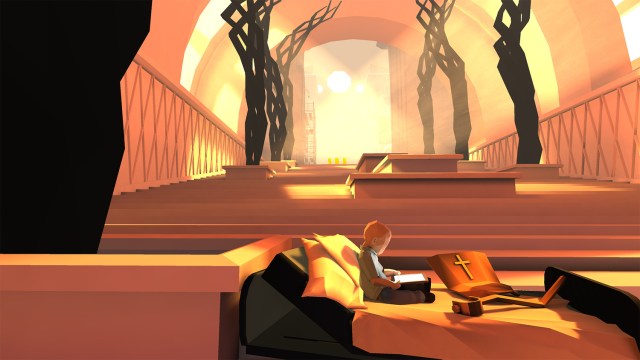
That Dragon, Cancer is the heartwrenching true story of the Green family’s now-deceased infant son, Joel, and his five year battle with cancer. TDC‘s unusual subject matter, combined with a use of gorgeous, surreal vignettes to tell its tale, attracted attention from sources both Christian and secular.
I don’t want to talk about that.
Instead, I want to tackle how I feel this title has been tragically misrepresented by the games media. And as a result, those who might have benefited most from playing it were turned away.
That Dragon, Cancer is not the story of Joel’s tragic death. It’s the story of his life. The difference may seem small, but it is extremely important, because it defines the very way you approach the game.
TDC transports you to sleepless nights filled with desperate prayer amidst Joel’s anguished screams. Its depiction of Cancer is quietly horrific–malevolent, tangled orbs of thorned menace lurking on the periphery of almost every scene, threatening to swallow the family whole.
Ryan Green, Joel’s father, dives into literal Depths of Despair, slowly drowning in the process. He wishes that science could step in and fix this, finding it easier to act and hope for the best than to keep believing in a miracle which may never come. What if “Invisible Jesus” doesn’t help? What if he says “No,” or isn’t listening in the first place? What if Ryan’s concerns–our concerns–are insignificant, lost on the ears of an all-powerful God?
Meanwhile, Amy Green, Joel’s mother, hopes against hope. Praying, and imagining a brighter future for her son than she can currently see. She cleans up comically spilled eggs and takes Joel to treatment after treatment, trying not to allow the thought to creep in that even after all of this, he could be gone within seconds.
HOWEVER (and this is the important bit), despite these visions of darkness and foreboding, fear and death, That Dragon, Cancer somehow preserves a deep sense of childlike wonder. The joy and happiness to be found in the simple act of living is made real, and provides comfort in the most frightening of times.
One moment you’re in a hospital, surrounded by reminders of the good health Joel may never have. The next, you’re watching him cartwheel through the sky, laughing, riding on the backs of majestic constellations.
A bright hallway is positively littered with loving messages to friends and family. Postcards are strung from the ceiling, crouching on chair armrests–occupying every spare nook and cranny. They address both those departed, and those, miraculously, still here. Still filling their corner of the world with light.
TDC spotlights the mundane beauty we take for granted. Whether feeding ducks on a lazy summer day, going down a slide in the playground, or getting a playful lick from a really adorable dog. Cart races, and kisses, and road trips to new places. A resting trust in God, and a family that cares about you. Hushed bedtime stories about little brothers, and a Dragon named Cancer, that in the end, can never truly win.
A faith worth celebrating. A journey, though painful, worth every step traveled.
That Dragon, Cancer is not the story of Joel’s death–of sadness. It’s the story of his life. Of his joy. Of pure, unadulterated, childlike love and wonder.





 Video Games and the Bible