Kingdom is a retro-styled indie game that uses simple controls, permanent death, and random generation to encourage exploration and a desire to find just how this strange world works across multiple plays. Playing as king or queen of an untamed, dangerous land, the fact your interactions all revolve around how you direct, build, and nurture your following inspires a surprising level of compassion.
Once, I had come into an unexpected windfall of coins (the main resource of the game) and used it to expand the left side of my settlement when a ragged group of disarmed, injured survivors came charging from the other side of the screen. I ran past them, the wreckage of ruined outposts and walls scrolling by.
In my rush to expand, I had forgotten defense, and in the process lost over half of my Kingdom. I didn’t feel bad about the loss of several hours of progress.
What I regretted was the people I had failed.
Kingdom
Biblical Recap
Timestamp:
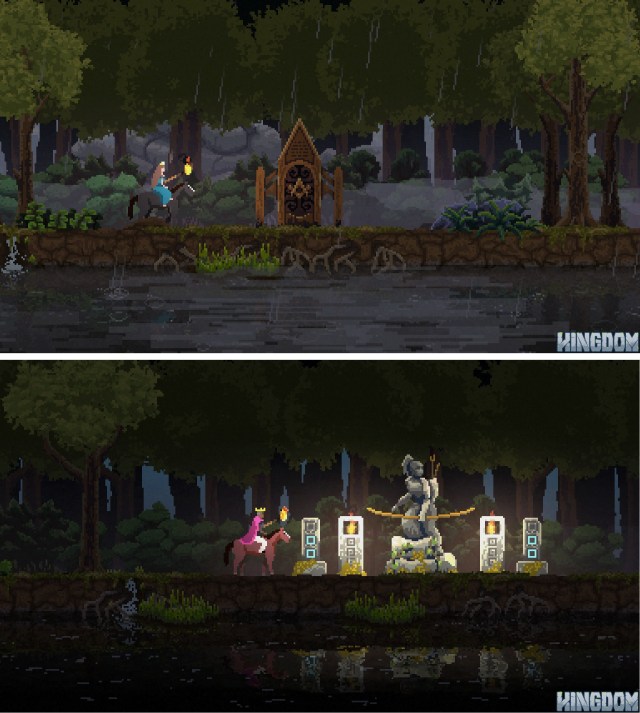
·1:18-8:29, 19:52-23:52: When discussing the Biblical significance of the two altar-like sites used to upgrade your Archer and Builder units, I find that the word “altar” commonly has a positive connotation and refers to one of God’s holy places in Scripture, while “high place” holds the opposite meaning. I also cover the possibility that, due to the game relying on minimalism and player interpretation, these sites could be something else entirely. (Leviticus 26:30, 1 Kings 15:13-14)
The Mason and Archer upgrade stations. The latter looks like a statue of a goddess of the hunt, such as Diana or Artemis.
Kingdom is published by Raw Fury Games and available on the PC via Steam, GOG, and the Humble Store among other marketplaces.
*This title was received for review/coverage. See our statement of ethics here and game review criteria here.
*The interview below was recorded October 10th, 2015*
I spoke with Tim Donley of upcoming indie action adventure Boss 101 about his previous work as Lead Artist ofPlanescape: Torment, building an amazing team, giving artists the freedom to create, and the role this plays in making an unforgettable game.
*This interview contains scattered instances of profanity*
You can contact Tim and learn more about the Boss 101 team by visiting their studio website at Donley Time Foundation.
Many thanks to Tim for his time, and Elijah Elmasri for his music!
*Sources of screenshots are listed in their respective file names.
2 months ago, I began recording a playthrough of BioShock Infinite–noting what (if any) Biblical parallels I found along the way. Below, you’ll find highlights from a few of these episodes.
I’m pretty sick at the moment, but I’ve emerged from my wall of tissues and hacking coughs to recap the first episodes of BioShock Infinite and the Bible–look forward to more highlight articles and Biblically-focused videos in the future!
Part 1
·13:02: A sign hanging in the lighthouse found in BioShock Infinite’s opening states “From Sodom shall I lead thee.” Biblically, Sodom and Gomorrah are not only the cities destroyed in Genesis, but ‘types’ or symbols of the world with its corruption, sin, and wickedness. The same could be said of Egypt and Babylon. (Revelation 11:7-10, Ezekiel 16:46-51)
Part 2
·00:01: In many ways, BioShock Infinite may be the most “Christian” game ever made–particularly if judged by how much Scripture it uses, draws from, or references. However, as you advance through the game, you begin to realize the Biblical ideas depicted and conveyed have been twisted into something unrecognizably…horrible. I can’t think of another word to describe the difference between the faith it shows and one that is Biblically-based and sound.
·00:49: This segment continues the examination of Sodom in the previous video, as both a concept and example of wickedness. (2 Peter 2:6-8)
·02:04: When Israel would rebel or sin en masse, Judah (the other part of the country) would often begin to do the same to an extreme degree. So much so, Continue reading →
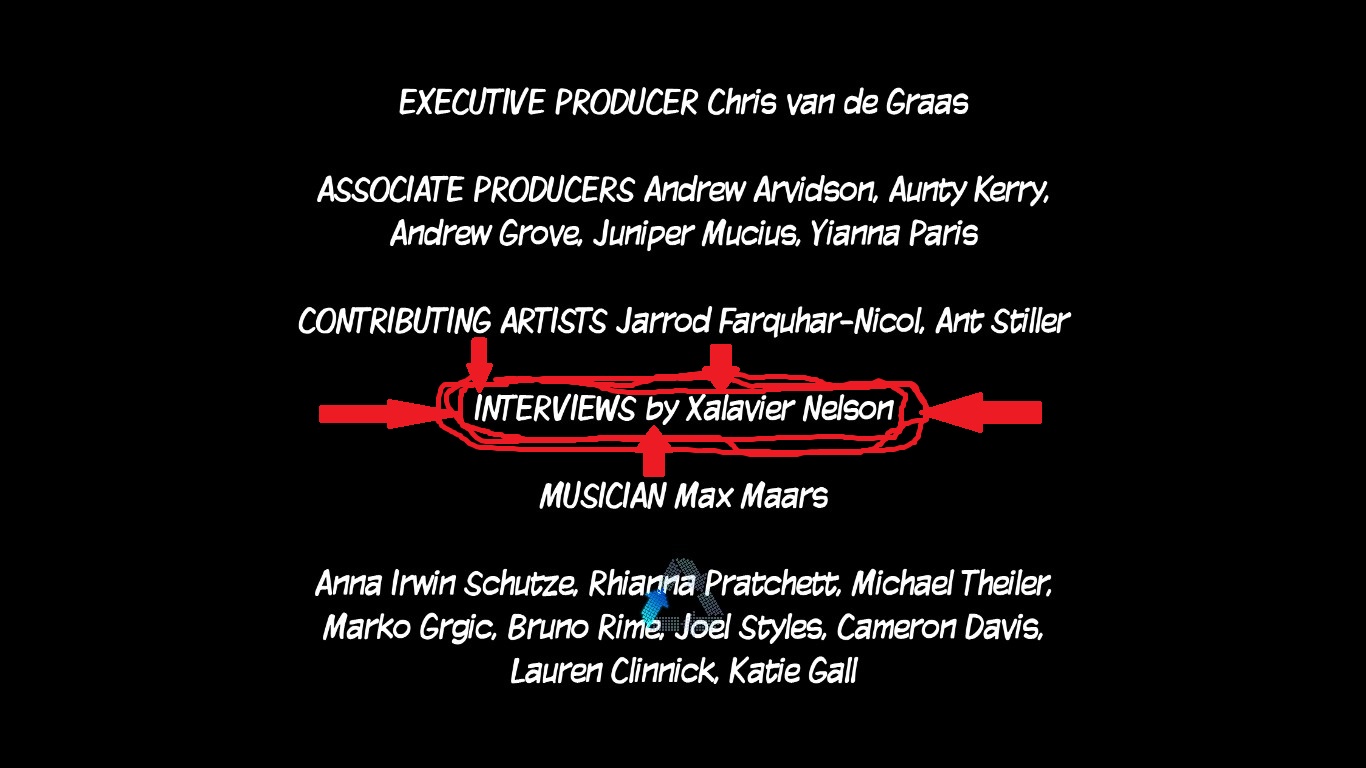
If you couldn’t tell by the excited, wildly-scrawled arrows and circles, that’s my name, there. After getting to know the family behind Ninja Pizza Girl in my interview with them for Video Games and the Bible last year, I went on to provide unlockable content for the game proper. As someone who is quite passionate about this title it’s really exciting, but the fact I primarily cover video games also makes it a bit awkward. Especially as I’m presented with more opportunities to contribute to the game development process.
I still want to cover these titles, though–which is why I’m coming to you.
The Video Games and the Bible YouTube channel is not monetized, ads do not appear on this site, and I currently don’t collect monetary donations (as stated on the Game Coverage Criteria page). I’ve done these things, particularly as the host of a Biblically-grounded website, to help assure anyone following my work that I have their best interests in mind. I analyze titles for months, recognizing their flashes of brilliance and their regrettable flaws. That would be reflected in my coverage whether or not I do or will work with a developer.
Furthermore, these are games I genuinely think you’d like to know about. The vast majority of titles on Steam alone fall through the cracks. If they suit you and the rest of my audience, I want to give them the spotlight they need–just as I would that of any other creator.
Of course, I’ll be disclosing any involvement or potential conflicts of interest (paid and unpaid) when and where appropriate. However, as these jobs begin to take a greater role in my life, I felt you deserve more than a one-line disclosure statement without any further explanation or input.
You’ve trusted me, supporting my work here and elsewhere–being transparent and open to your feedback is the least I can offer in return. You can contact me through the Contact form and/or Twitter if you’d prefer these games are not covered, or would like to suggest a more nuanced approach.
In the series of videos above, I spoke with Dan Silvers of Lantana Games about their new game Mondrian – Abstraction in Beauty, key scamming/reselling, Kickstarter, Early Access, and his studio’s desire to leave a legacy by employing students and creating fun educational games.
Our talk focused on the realities of game development, with the time and funds needed to complete an ambitious project, along with the skewed perspective of mainstream gaming in this regard, acting as particular focuses.
Whether you’re planning to become a game developer or currently are, it’s pretty eye-opening. Many thanks to the studio for being so open about their experience!
*This title was received for review/coverage. See our statement of ethics here and game review criteria here.
*Sources of screenshots are listed in their respective file names.
*Pertinent Scriptures (and occasionally, websites) are highlighted with blue lettering–click to view them.
______________________________
In the face of a world that mocks the God who came to save them as well as us, admitting our common heritage as sinners—normal people saved by the grace of God alone–is difficult. So, many Christians attempt to cultivate an image of unpolluted righteousness, forming themselves into apparently shining examples of moral fiber.
I’m not saying this is a bad thing. We’re certainly meant to be examples. I’m asking the question: What do you do when even one of those jagged lines you drew in the sand turns out to be a facade? What do you do when you’re placed in an environment without real-life consequences (such as that found in a video game) and confronted with blocked progress, pain, or just basic desire?
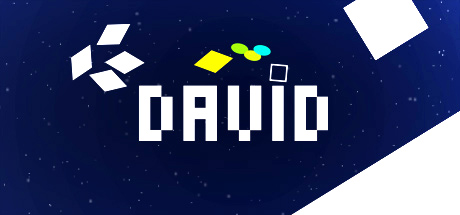
David. (yes, with a period) opens with an unseen being speaking to you in concise, massively-rendered phrases.
“THERE IS EVIL, BUT THIS IS DAVID.
I’VE PUT YOU HERE ON PURPOSE…”
[Continuing after the tutorial]
“YOUR FOES MAY OUTNUMBER YOU, AND YOUR SIZE MAY SEEM FAR TOO SMALL, BUT YOU MUST USE YOUR GIFT TO CONFRONT THE EVILS OF THIS WORLD, DAVID.
AND YOU WILL PREVAIL, FOR YOU ARE FOR ME, AND I AM WITH YOU…”
In most titles, this would be simple exposition–a brief prologue designed to get you playing the game proper as soon as possible. However, in David., I think this is where Christian developer Andrew Armstrong shows his heart.
The game requires accuracy and attention from your every move, but no matter how difficult or seemingly insurmountable the challenge, it wants you to win. It wants to show that like the Biblical David, using your small box body and an even smaller ‘sling,’ you can defeat any giant. The “gift” given in the introduction isn’t just your weapon.
It’s hope.
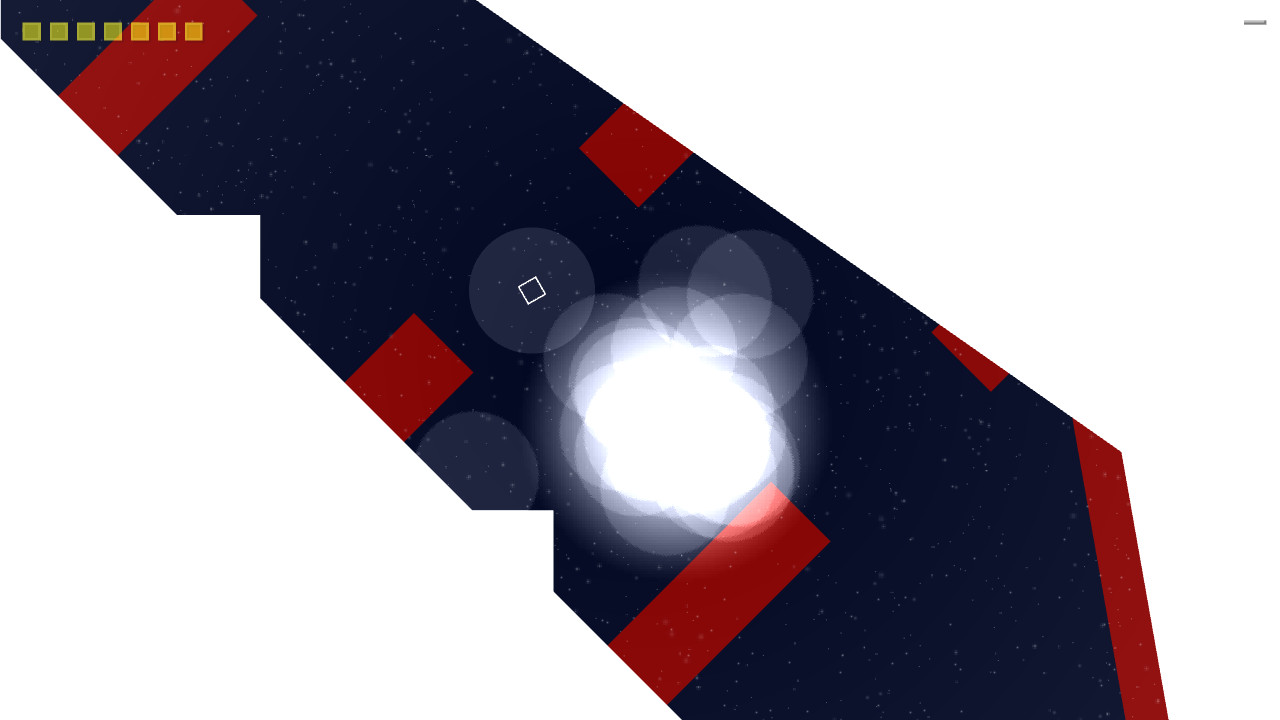
David (the boxy hero of the game) races away from a monster composed of circular chunks of light.
After the tutorial, you’re thrown into a room of doors labeled with names ranging from “GREED” to “PRIDE.” As David, a small white box with a translucent, halo-like ‘sling,’ you’ll use your gift to take apart each massive boss contained in these levels piece by piece.
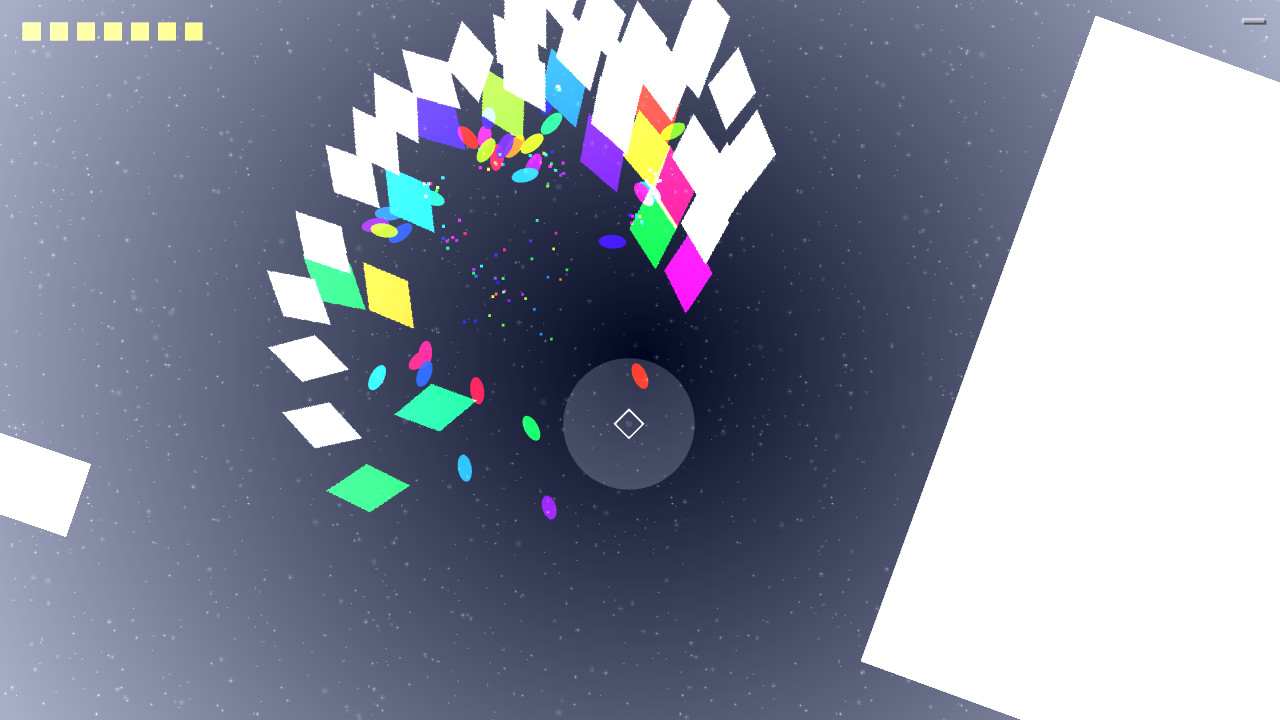
Much like the critically-acclaimed Shadow of the Colossus, every opponent is a puzzle. While your goal is apparently as simple as blasting enemies to bits in a display of technicolor destruction, this first requires finding their patterns, and eventually exploiting their weaknesses.
You start off feeling overwhelmed, clawing to save even one portion of your health bar. Barely managing to control the slippery movement speeding you around the game’s deathtraps, just when you feel like quitting, you notice time slows when you activate your sling. Using this knowledge, you dodge an attack that would have seemed impossibly fast only a short time ago. You realize the correlation between the names of the rooms and the theme of the foes within, making the “WOLF” stumble into it’s own ambush, and knocking it into colored sparks when it struggles to pursue you once again.
Outside of the optional endless Arena mode, your character’s abilities don’t actually improve. You finish the game with the same tools you had when you began. However, along the way, you became more perceptive, accurate. You mastered the formerly problematic movement, speeding gracefully through hazards and danger. You threw yourself at “SIN,” aiming for it’s lurid red eyes through the chaos…
And then the game is over.
David avoids BROOD–an immense monster lurking just below the surface of this ‘lake.’
Even with several free updates adding new levels, achievements, and secrets, the game is quite short. I managed to beat every boss on the highest difficulty in roughly three hours, with another half hour or so dedicated to grabbing most of the achievements. The controls tend to be fiddly, with a reliance on fast, precise mouse clicks within David’s narrow halo.
However, I personally feel these niggles pale in recognition of what this game has done.
For years, I’ve wanted a game to come along that shows you can integrate Biblical concepts with gameplay in a meaningful way. That we can go beyond simply renaming a health bar a ‘faith’ meter, equipping a player with the literal Armor of God, or the like.
And now? I think I’ve found it.
*Sources of screenshots are listed in their respective file names.
I originally wrote this article as a guest review for IndieHaven.com. Many thanks to them for the opportunity, and allowing me to now share this piece with you…
__________________________________________
As a young Christian who wanted to enter the video game industry, I always felt like an outsider looking in. I regularly saw games and creators I admired disparage the very faith that defined the way I see the world. Titles made by my brethren for evangelistic purposes only exacerbated the issue by being derivative, tedious, or even just outright offensive, providing example after example that the idea of a ‘Christian’ game can’t work. Of these, Super 3D Noah’s Ark is one of the most infamous, and perhaps the easiest to mock.
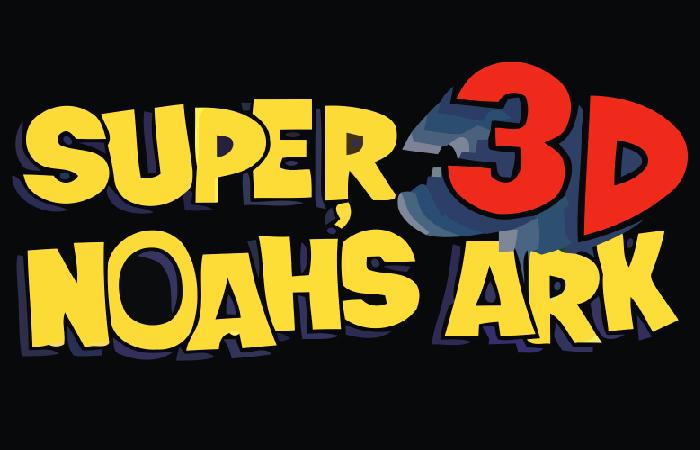
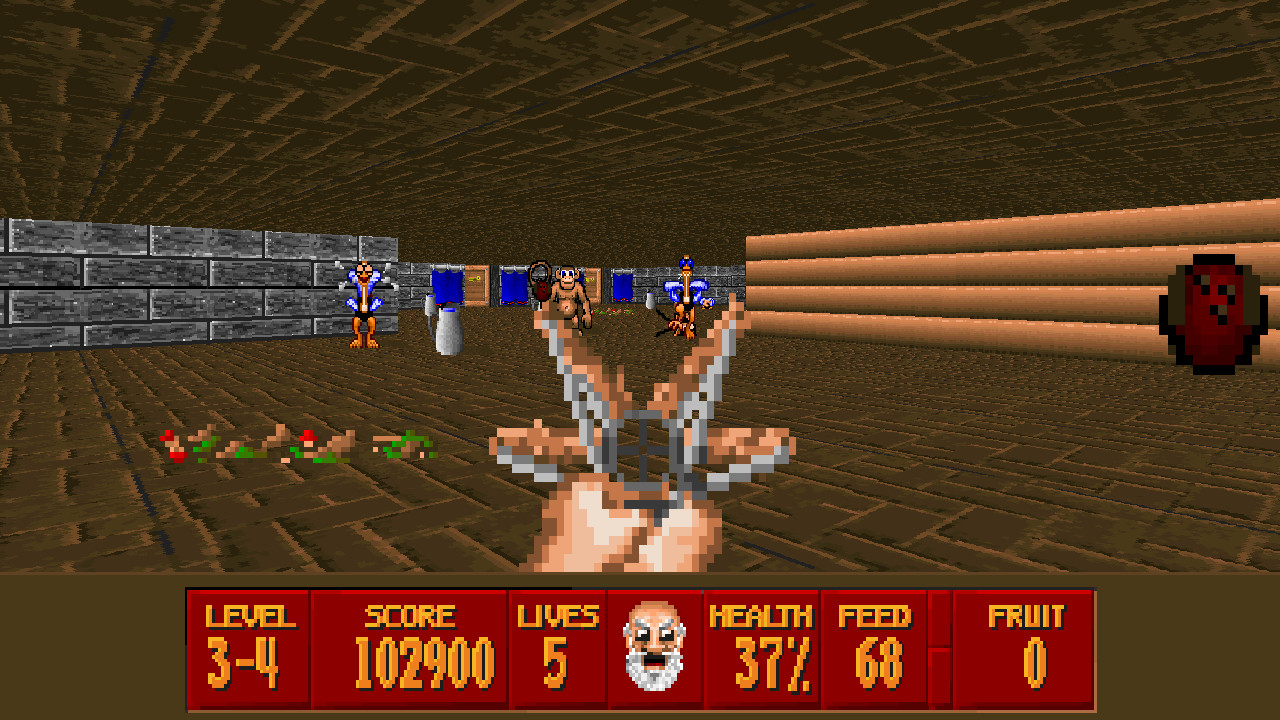
Noah’s empty, slightly constipated expression leers at the bottom of your HUD as you use a pentagram-like slingshot (among other ‘weapons’) to put animals to sleep aboard the Ark. Exuding a syrupy sweet image from the moment you see its title screen– almost a fourth of which is occupied by a Dove Foundation “Family Approved” symbol– Super 3D Noah’s Ark’s high-pitched electronic music adopts the style of a Sunday School ditty you can’t quite get out of your head.
The fact Super 3D Noah’s Ark is in many ways a clone or straight reskin of Wolfenstein 3D only helped contribute to its reputation as one of the worst religious titles in gaming.
I’m not going to pretend I set these thoughts, desires, and painful memories aside for the sake of forming an ‘objective,’ measured opinion. This was personal. Super 3D Noah’s Ark was one of the games I held responsible for my initially hiding my faith in an effort to be accepted.
I wanted to hate it. I wanted to tear it apart with a stream of biting witticisms served in the deadpan style of the most seasoned critic. I wanted to look like my heroes–show I could be “one of the guys…”
…but I can’t.
Looking beyond its many, many unfortunate bits, there’s actually a decent game here; one that took me seven years to finally find.
Every Wednesday from 2-4 PM EDT, I (Nelson) co-hosted a live, non-religious gaming talk show called Beta Wave Radio. Recently, I’ve taken a break from the weekly show to focus on specific guests. However, my purpose remains the same–to show the humanity behind the games we play.
__________________________________
*The interview below was recorded July 5th, 2015*
I spoke with Marc Straight of upcoming horror action-platformer Worlds of REM about an upcoming event he’s holding to benefit the Center for Excellence in Autism Research, advocacy, suicide, and the incredible person who inspired this journey: Jaa Cooper.
It’s probably the most important and emotionally affecting interview I’ve conducted yet. Take a listen:





 Video Games and the Bible